Explore how artificial intelligence is revolutionizing different industries with innovative applications and real-world examples.
Artificial intelligence is not a one-size-fits-all technology. Its applications vary significantly across industries, addressing specific challenges and creating unique opportunities in each sector. Understanding these industry-specific applications is crucial for organizations looking to leverage AI effectively.
While the core AI technologies—machine learning, natural language processing, computer vision, and others—remain consistent, their implementation and impact differ based on industry context, data availability, regulatory requirements, and business objectives.
In this section, we explore how AI is transforming major industries, highlighting key applications, real-world examples, and emerging trends that are reshaping these sectors.
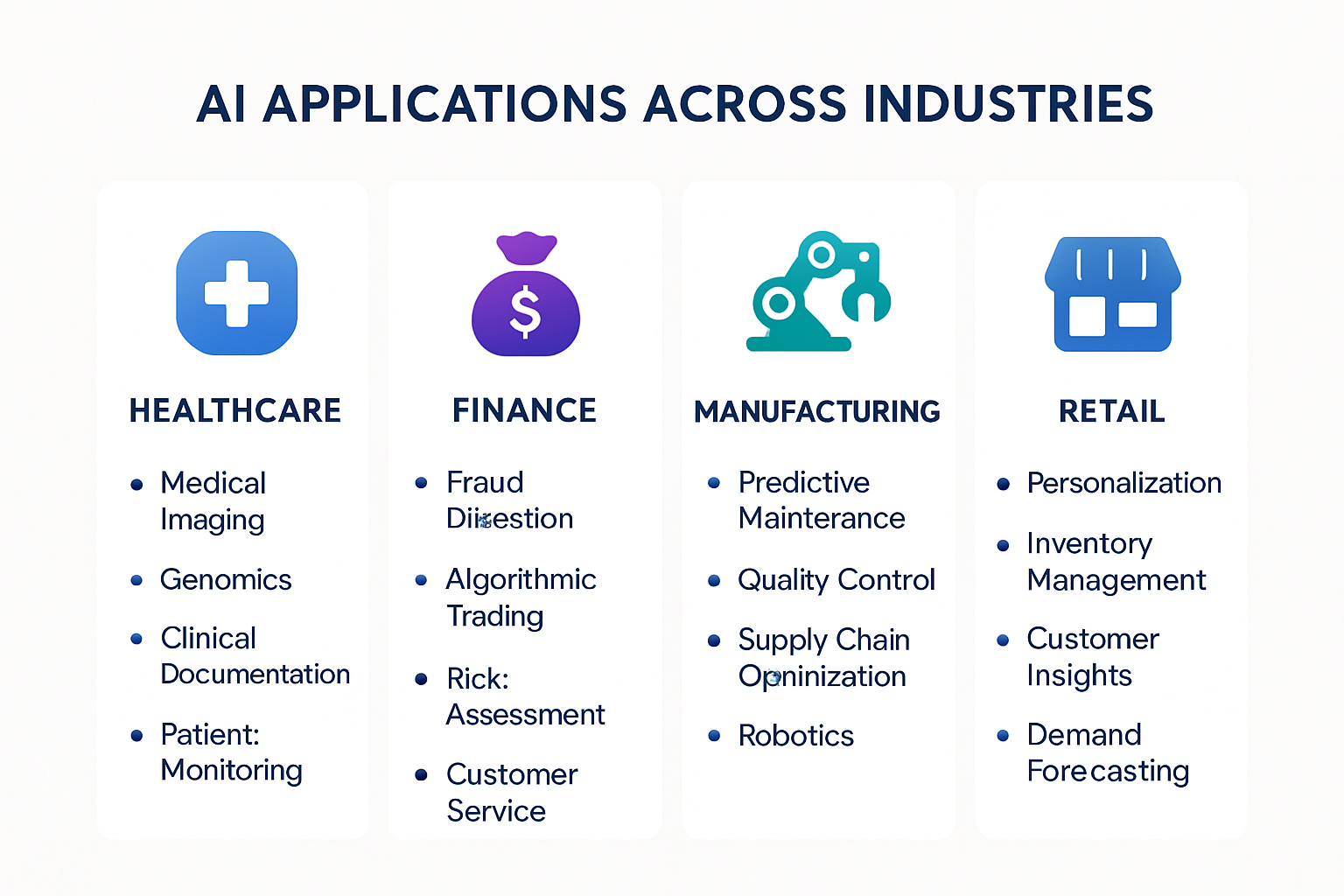
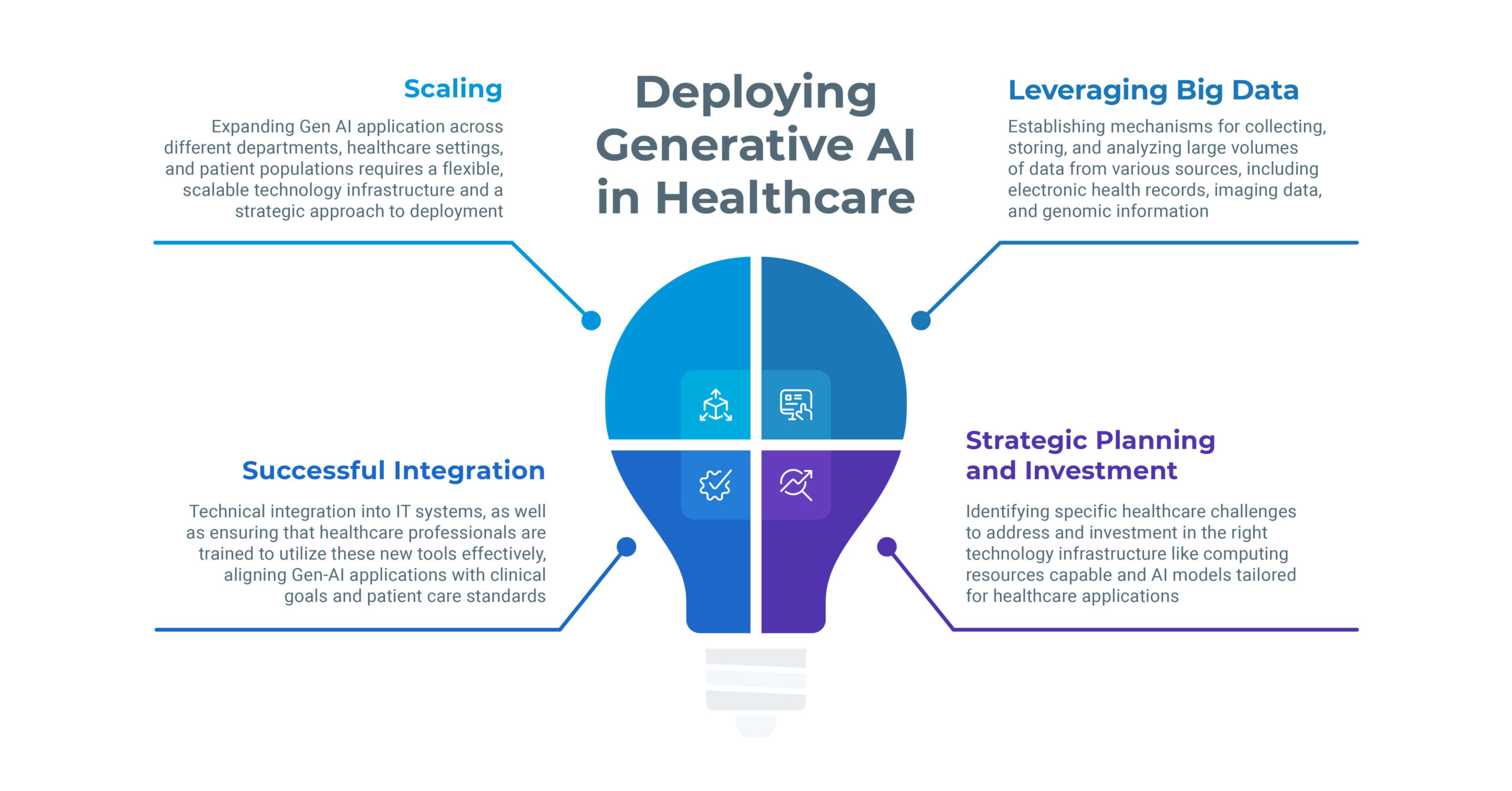
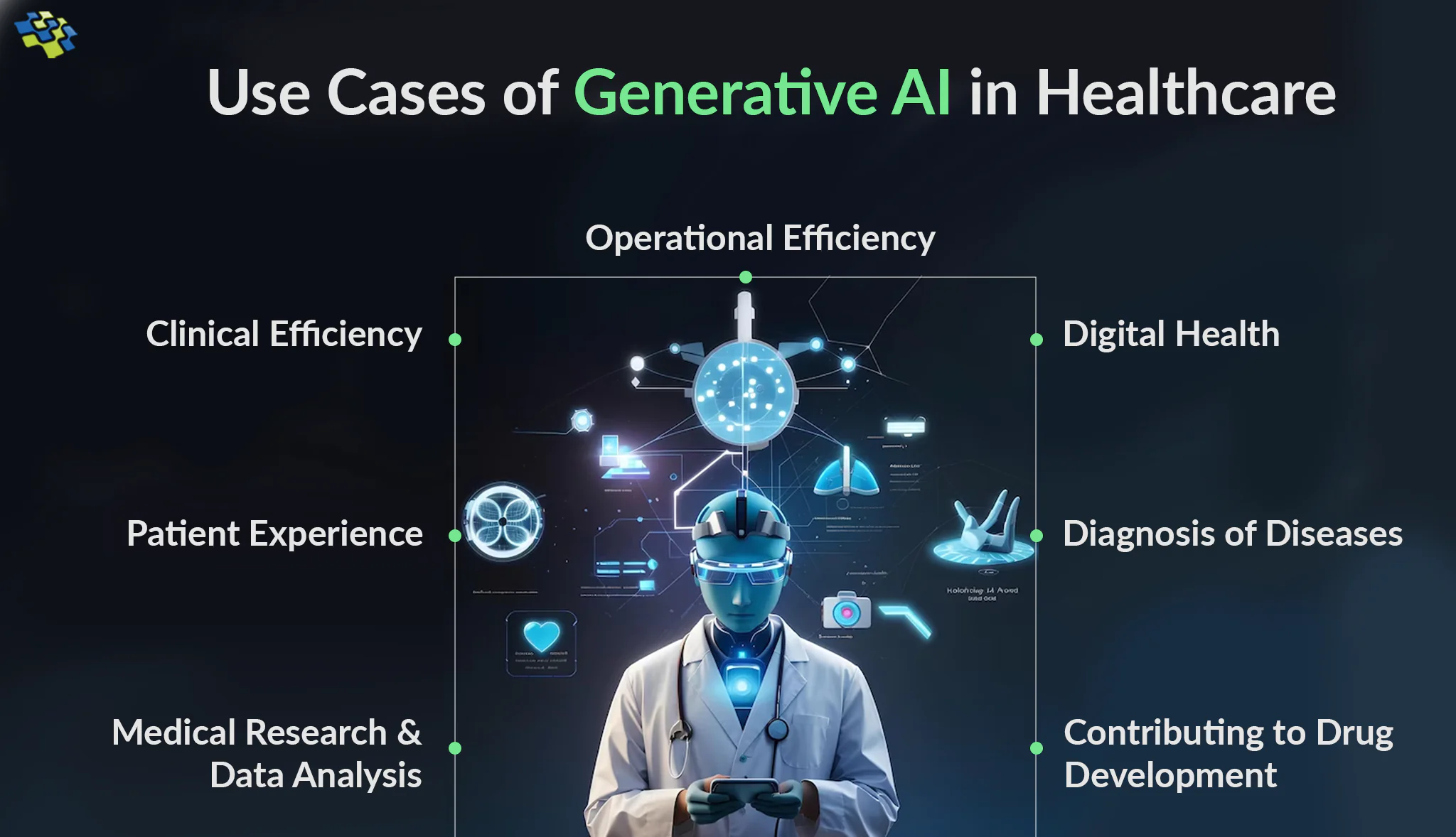
Healthcare is experiencing one of the most profound transformations from artificial intelligence. AI technologies are enhancing diagnostic accuracy, enabling personalized treatment plans, streamlining administrative processes, and accelerating medical research.
The impact of AI in healthcare extends from improving individual patient outcomes to enhancing the efficiency of entire healthcare systems. As these technologies continue to mature, they promise to address some of the sector's most pressing challenges, including rising costs, provider burnout, and access to quality care.
AI has revolutionized genomic medicine, enabling rapid advancements in precision medicine. Machine learning algorithms analyze large genomics datasets to predict disease risks, identify complex genomic variants, and support personalized treatment strategies, particularly in cancer care.
AI-powered imaging analysis is transforming diagnostics for cancer and other diseases. Studies show that AI support can increase cancer detection rates while reducing false positives. These systems not only improve diagnostic accuracy but also enable faster radiology workflows and reduced costs.
Generative AI is helping reduce clinician burnout by automating documentation tasks. AI-powered scribes can increase recording speed by up to 170% compared to human scribes, representing a potential 90% reduction in time spent on administrative tasks.
The integration of AI with the Internet of Medical Things (IoMT) enables continuous patient monitoring through wearable devices. These systems can track vital signs, predict acute health events, and provide personalized health insights, improving outcomes for chronic conditions like diabetes.
The financial services industry has been at the forefront of AI adoption, leveraging these technologies to enhance security, improve customer experiences, optimize operations, and generate deeper insights from financial data.
AI is helping financial institutions balance seemingly contradictory goals: increasing security while reducing friction, personalizing services while maintaining privacy, and managing risk while identifying new opportunities. The result is a more efficient, secure, and customer-centric financial ecosystem.
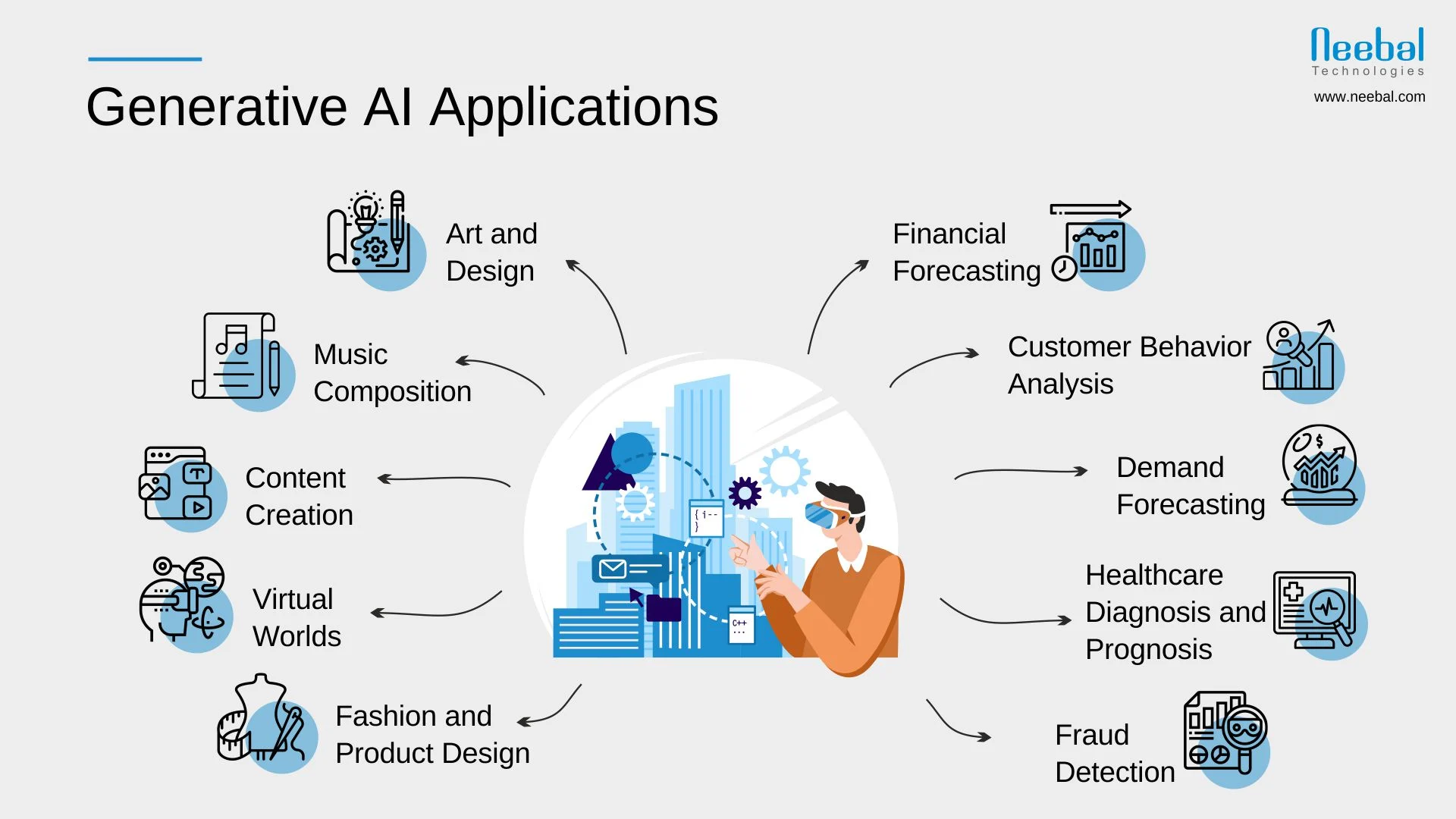
AI systems analyze transaction patterns in real-time to identify potentially fraudulent activities with greater accuracy than rule-based systems. Machine learning models continuously adapt to new fraud techniques, significantly reducing false positives while improving detection rates.
Advanced AI algorithms analyze market data, news, social media, and other sources to identify trading opportunities and execute transactions at optimal times. These systems can process information and react to market changes far faster than human traders.
AI enhances credit scoring and risk evaluation by analyzing traditional and alternative data sources. This enables more accurate risk profiles, expands access to financial services for underserved populations, and helps institutions better manage their overall risk exposure.
AI-powered chatbots and virtual assistants provide 24/7 customer support, handling routine inquiries and transactions while seamlessly escalating complex issues to human agents. These systems continuously improve through interaction, delivering increasingly personalized service.
Manufacturing and supply chain operations are being transformed by AI technologies that enhance efficiency, quality, and resilience. From the factory floor to global logistics networks, AI is enabling smarter, more adaptive systems that can respond to changing conditions in real-time.
The integration of AI with Internet of Things (IoT) sensors, robotics, and enterprise systems is creating the foundation for Industry 4.0—a new era of intelligent, connected manufacturing that promises significant improvements in productivity, quality, and sustainability.
AI systems analyze sensor data from machinery to predict potential failures before they occur, enabling proactive maintenance that reduces downtime, extends equipment life, and optimizes maintenance resources. Studies show this approach can reduce unplanned downtime by up to 50%.
Computer vision systems inspect products with greater speed and accuracy than human inspectors, identifying defects that might otherwise be missed. These systems can analyze subtle patterns and variations that indicate potential quality issues.
AI algorithms optimize inventory levels, logistics routes, and procurement strategies by analyzing historical data, market trends, and real-time conditions. This improves efficiency while enhancing resilience against disruptions.
AI-powered robots and cobots (collaborative robots) are becoming more versatile and adaptive, handling increasingly complex manufacturing tasks while safely working alongside human workers. These systems can learn new tasks through demonstration rather than explicit programming.
The retail industry is leveraging AI to create more personalized, convenient, and engaging shopping experiences while optimizing operations behind the scenes. From online recommendations to in-store experiences, AI is helping retailers better understand and serve their customers.
As competition intensifies and consumer expectations continue to rise, AI has become a critical differentiator for retailers seeking to build customer loyalty, optimize their operations, and create seamless omnichannel experiences that blend physical and digital shopping.
AI analyzes customer behavior, preferences, and purchase history to deliver highly personalized product recommendations, content, and offers. Advanced systems can even adapt to contextual factors like time of day, weather, and current events.
AI-powered inventory systems predict demand patterns at granular levels, optimizing stock levels across locations to reduce both stockouts and excess inventory. These systems can account for seasonal trends, promotions, and even social media sentiment.
Advanced analytics tools process data from multiple touchpoints to create comprehensive customer profiles and identify emerging trends. This enables retailers to anticipate changing preferences and adapt their strategies accordingly.
AI models incorporate a wide range of variables—from historical sales to social media trends to economic indicators—to forecast demand with unprecedented accuracy. This improves planning across merchandising, supply chain, and marketing functions.
Artificial intelligence is creating value across virtually every sector. Here's how AI is transforming other key industries.
AI is personalizing learning experiences, automating administrative tasks, and providing insights into student performance. Adaptive learning platforms adjust content difficulty based on individual progress, while AI tutors provide 24/7 support to students.
From autonomous vehicles to intelligent traffic management systems, AI is making transportation safer, more efficient, and more sustainable. Predictive maintenance for vehicles and infrastructure is reducing downtime and extending asset lifespans.
Precision agriculture powered by AI is optimizing crop yields while reducing resource usage. Computer vision systems monitor crop health, while predictive analytics help farmers make better decisions about planting, irrigation, and harvesting.
AI is transforming energy production, distribution, and consumption. Smart grids use AI to balance supply and demand in real-time, while predictive maintenance reduces outages. AI is also accelerating the development of renewable energy technologies.
As AI technologies continue to advance, we can expect even more profound transformations across industries. Cross-industry innovations will create entirely new business models and value propositions that weren't previously possible.
Organizations that stay at the forefront of these developments—adapting AI to their specific industry context while learning from applications in other sectors—will be best positioned to thrive in an increasingly AI-driven economy.
Explore AI Business Solutions