AI Solutions for Business

Discover how artificial intelligence can transform your business operations, increase efficiency, and drive innovation.

AI in Business: The Competitive Advantage

In today's rapidly evolving business landscape, artificial intelligence has become a critical differentiator for organizations seeking to stay competitive.
AI Business Solutions

Artificial intelligence is no longer just a futuristic concept—it's a practical business tool that's delivering measurable results across industries. Organizations that effectively implement AI solutions are seeing significant improvements in operational efficiency, customer experience, decision-making, and innovation.

The business value of AI comes from its ability to:

  • Analyze vast amounts of data to uncover insights that would be impossible for humans to discover
  • Automate routine and repetitive tasks, freeing human resources for higher-value activities
  • Personalize customer experiences at scale, improving satisfaction and loyalty
  • Optimize complex processes and systems for maximum efficiency
  • Enable new products, services, and business models that weren't previously possible

As AI technology continues to mature, the gap between AI leaders and laggards is widening. Organizations that delay AI adoption risk falling behind competitors who are already leveraging these powerful tools to transform their businesses.

Key Business Applications of AI

Artificial intelligence can be applied across virtually every business function. Here are the most impactful applications that are delivering value today.

⚙️

Process Automation

AI-powered automation goes beyond traditional rule-based systems to handle complex, variable processes. From intelligent document processing to adaptive workflow management, AI can automate tasks that previously required human judgment.

📊

Data Analysis & Insights

Advanced analytics powered by AI can process structured and unstructured data to identify patterns, predict outcomes, and recommend actions. This enables more informed decision-making across all levels of the organization.

👥

Customer Experience Enhancement

AI enables hyper-personalization of customer interactions, predictive service, and intelligent support systems. This creates more engaging, relevant experiences that build loyalty and increase customer lifetime value.

💡

Product Innovation

From generative design to predictive market analysis, AI is accelerating the product development cycle and enabling the creation of more innovative, customer-centric offerings.

🔍

Risk Management

AI systems can identify potential risks earlier and with greater accuracy than traditional methods. This applies to financial risks, security threats, compliance issues, and operational vulnerabilities.

⛓️

Supply Chain Optimization

AI can predict demand fluctuations, optimize inventory levels, identify potential disruptions, and recommend mitigation strategies, creating more resilient and efficient supply chains.

AI Implementation Strategies

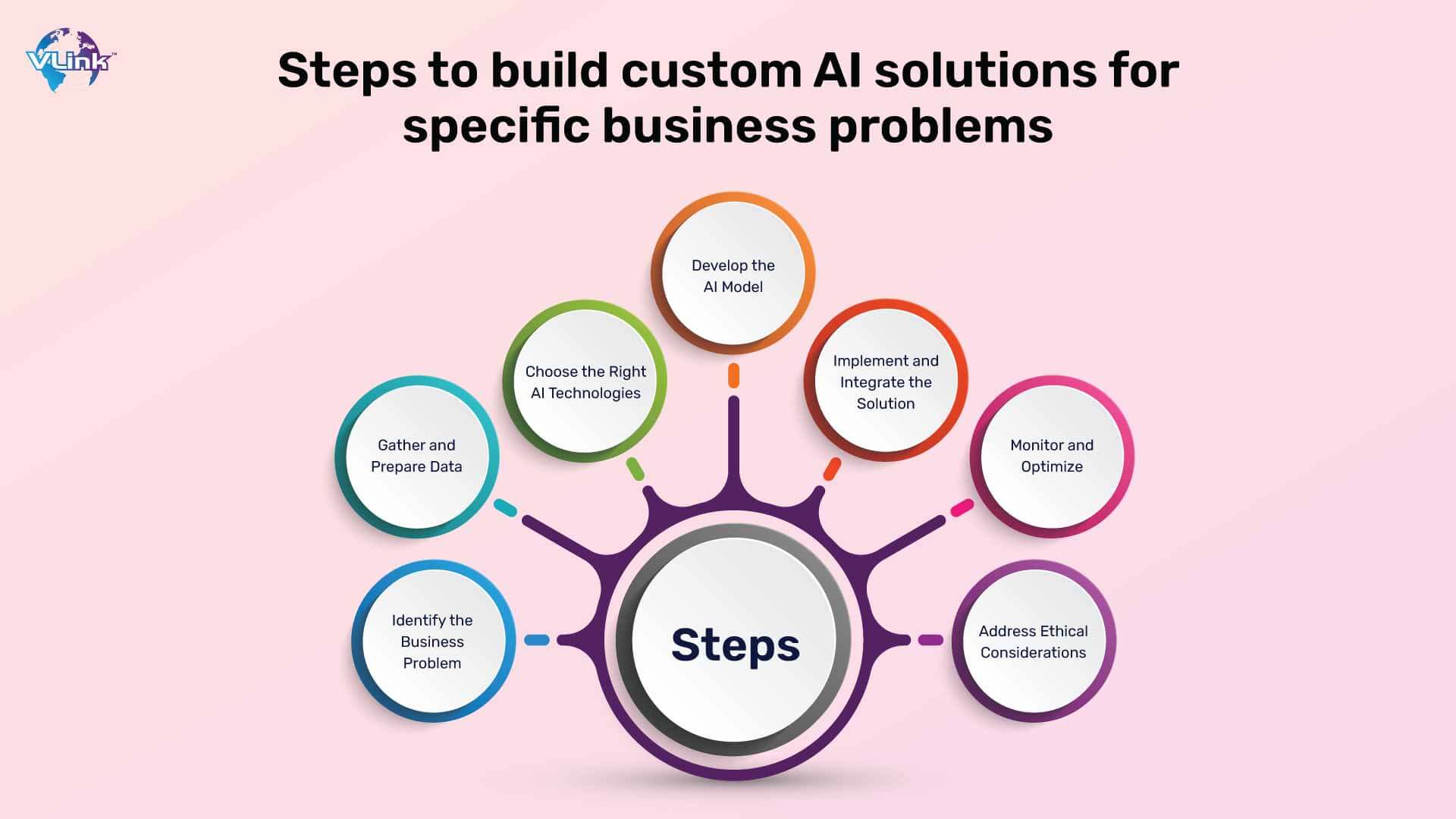
Successful AI adoption requires a strategic approach. Follow this proven roadmap to implement AI solutions in your organization.

AI Implementation Roadmap

Implementing AI in your business is not just a technical challenge—it's a strategic transformation that requires careful planning, cross-functional collaboration, and a focus on business outcomes. The most successful AI implementations follow a structured approach that balances innovation with practical considerations.

Our recommended implementation roadmap is designed to maximize the chances of success while minimizing risks. It emphasizes starting with clear business objectives, building the necessary foundations, and scaling gradually based on proven results.

1

Assessment & Strategy

Begin by identifying specific business challenges or opportunities where AI could add value. Assess your organization's AI readiness, including data availability and quality, technical capabilities, and cultural factors. Develop a clear strategy with prioritized use cases and defined success metrics.

2

Data Preparation

AI systems are only as good as the data they're trained on. Inventory your data assets, address quality and completeness issues, and establish the data infrastructure needed to support AI initiatives. This may include data integration, cleaning, and governance processes.

3

Solution Selection

Based on your specific use cases, determine whether to build custom AI solutions, leverage pre-built platforms, or use a hybrid approach. Consider factors like technical complexity, time-to-value, cost, and the strategic importance of the capability.

4

Pilot Implementation

Start with a limited-scope pilot to validate the solution's effectiveness and identify any implementation challenges. This allows you to demonstrate value quickly while minimizing risk. Use the pilot to refine your approach before broader deployment.

5

Scaling & Integration

Once the pilot has proven successful, scale the solution across the organization. This includes integrating with existing systems, adapting business processes, and ensuring users are properly trained. Focus on change management to drive adoption.

6

Monitoring & Optimization

Continuously monitor the performance of your AI solutions against defined metrics. Regularly retrain models to maintain accuracy as conditions change. Gather user feedback and make ongoing improvements to maximize value.

AI Implementation Case Studies

Real-world examples of organizations that have successfully implemented AI solutions to transform their businesses.

Global Retailer Transforms Customer Experience with AI

Industry: Retail
Company Size: Enterprise
Implementation Time: 8 months

A leading global retailer was struggling with declining customer satisfaction scores and increasing competition from digital-native competitors. They implemented an AI-powered personalization engine that analyzed customer behavior across channels to deliver tailored recommendations and experiences.

The implementation began with a pilot in their mobile app, which was then expanded to their e-commerce site and eventually integrated with in-store systems. The solution used machine learning to continuously improve its recommendations based on customer responses.

Results:

  • 28% increase in customer engagement
  • 17% growth in average order value
  • 12% improvement in customer satisfaction scores
  • ROI achieved within 6 months of full implementation

Manufacturing Company Reduces Downtime with Predictive Maintenance

Industry: Manufacturing
Company Size: Mid-market
Implementation Time: 6 months

A mid-sized manufacturing company was experiencing significant production losses due to unexpected equipment failures. They implemented an AI-based predictive maintenance solution that used sensor data from their machinery to identify potential failures before they occurred.

The implementation involved installing additional sensors on critical equipment, building a data pipeline to collect and process the information, and developing machine learning models to predict failure patterns. The system was integrated with their maintenance management software to automatically generate work orders.

Results:

  • 73% reduction in unplanned downtime
  • 21% decrease in maintenance costs
  • 18% improvement in overall equipment effectiveness (OEE)
  • Annual savings of $2.4 million

ROI of AI Implementation

Understanding the financial impact of AI investments is crucial for making informed decisions and securing stakeholder support.

Measuring AI's Financial Impact

The return on investment for AI initiatives can be substantial, but it varies significantly based on the specific use case, implementation approach, and organizational context. When evaluating AI investments, consider both direct financial returns and indirect benefits that may be harder to quantify but equally valuable.

Key factors that influence AI ROI include:

  • Implementation costs: Including technology, data preparation, integration, and change management
  • Time to value: How quickly the solution begins delivering measurable benefits
  • Scalability: The ability to expand the solution to additional use cases or business units
  • Maintenance requirements: Ongoing costs for model retraining, data updates, and technical support

Most organizations find that AI investments deliver the highest returns when they're focused on specific, high-value business problems rather than implementing AI for its own sake. Starting with clear objectives and success metrics is essential for accurately measuring and maximizing ROI.

Average ROI by AI Application Type

3.2x
Process Automation
4.1x
Predictive Analytics
2.8x
Customer Experience
4.5x
Predictive Maintenance

Generative AI for Business Growth

Explore how generative AI is creating new opportunities for innovation, efficiency, and competitive advantage.

Generative AI for Business

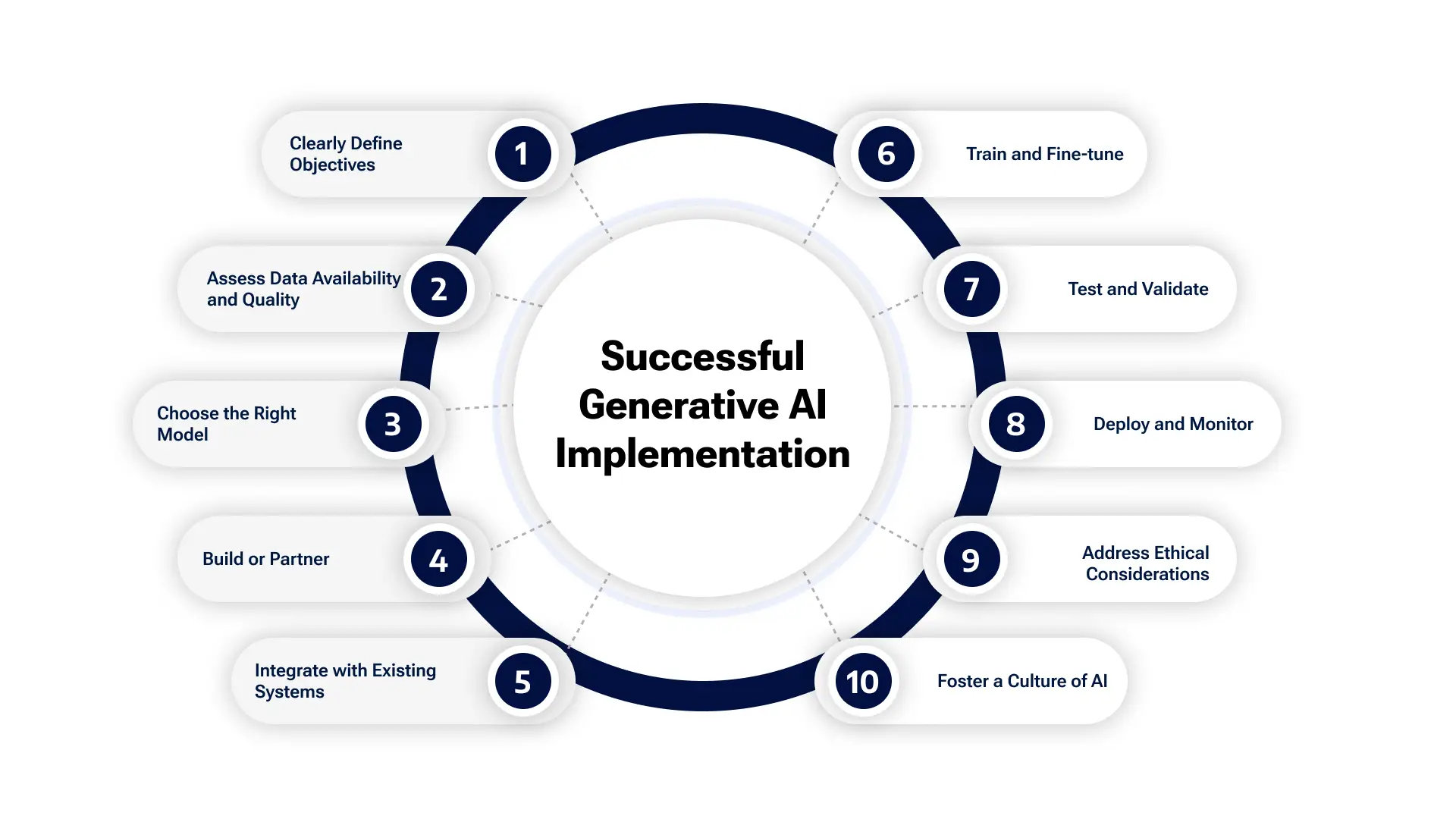
Generative AI represents one of the most transformative technologies for businesses in recent years. Unlike traditional AI systems that primarily analyze existing data, generative AI can create new content, designs, code, and solutions that didn't previously exist.

This capability is opening up entirely new possibilities for businesses across functions:

  • Content Creation: Automatically generating marketing copy, product descriptions, reports, and other text-based content at scale
  • Design & Product Development: Creating new design concepts, prototypes, and variations based on specific parameters and constraints
  • Software Development: Generating code, debugging existing applications, and accelerating the development process
  • Customer Service: Powering more sophisticated chatbots and virtual assistants that can handle complex interactions
  • Strategic Planning: Generating alternative scenarios and approaches to business challenges

Organizations that effectively harness generative AI are seeing significant benefits in terms of productivity, innovation speed, and the ability to personalize at scale. However, successful implementation requires careful consideration of data quality, ethical implications, and integration with human workflows.

Ready to Transform Your Business with AI?

Discover how AI can address your specific industry challenges and create new opportunities for growth and innovation.

Explore Industry Applications